The Morgans of Nash

from tenant farmers to Landowners

Will of Robert Morgan
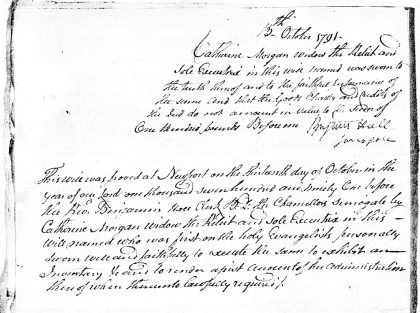
The Will of Robert Morgan 1791

The Morgan family of Nash forms part of the maternal ancestry of our grandmother, Catherine Alice Mary Phillips, who was born on 30 May 1907 at Cwm Farm, Rogerstone. Our research has so far traced this branch of the family back to our fifth great-grandparents, Robert Morgan (1743–1791) and Catherine Bundy. Robert was born in Wilcrick, near Magor, and as a young man moved onto the Gwent Levels, where he farmed in the neighbouring parishes of Goldcliff and Nash as a tenant.

In 1771 he married Catherine Bundy, who left her home in Magor to begin married life with him. Together they raised four children: Ann Morgan (b.1772), Samuel Morgan (1773–1840), Diana Morgan (b.1776) and Mary Morgan (b.1778). Samuel, our fourth great-grandfather, would later become one of the most prosperous farmers in the family.

As the son of an industrious farmer, Samuel’s future was shaped from an early age as he worked alongside his father. Robert Morgan died on 1 August 1791 and was buried at the historic church of St Mary Magdalene in Goldcliff. Fortunately, he left a will, written on 26 June 1791 and proved on 13 October that year, providing a valuable insight into the family’s circumstances. Catherine inherited the household goods and was appointed sole executrix, while Samuel, Diana and Mary each received £50. Ann, the youngest child, was to receive £20 when she reached the age of twenty-one.

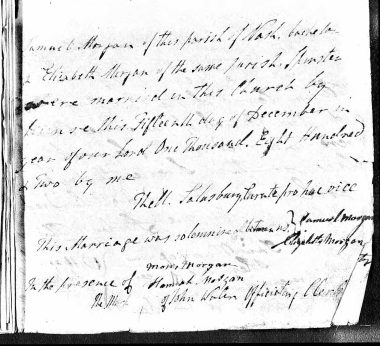
Following his father’s death, Samuel almost certainly continued farming with the support of his mother and sisters. On 15 December 1802 he married Catherine Morgan at St Mary’s Church, Nash. Catherine was the daughter of Moses Morgan and Elizabeth Hignell, both of Nash.

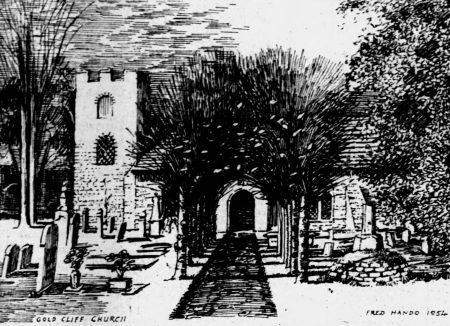
St Mary Magdalene’s Church, Goldclif
St Mary Magdalene’s Church, Goldcliff
Samuel and Catherine marry 15 Dec 1802
Samuel and Catherine marry, 15 Dec 1802

The couple established their home at Fair Orchard Farm, where they raised a large family. Their children were Samuel Morgan (1803–1803), Elizabeth Morgan (1804–1878), Hannah Morgan (1806–), Catherine Morgan (1810–1869), Amelia Morgan (1812–1838), Ann Morgan (1814–), Jane Morgan (1815–), Samuel Morgan (1816–1839) and Moses Morgan (1820–1858).

Samuel experienced his share of family tragedy. His wife Catherine died in June 1833 at the age of 54 and was buried at St Mary Magdalene’s Church in Goldcliff. With three of their children still in their teens, Samuel was left to manage both the farm and the family until his own death seven years later.

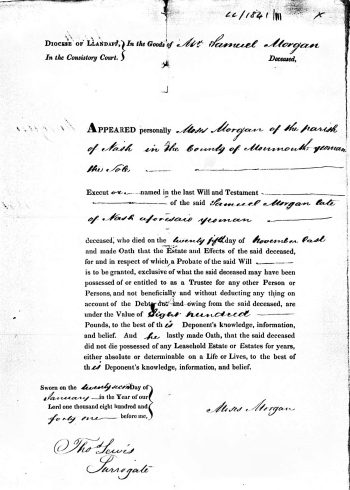
Much of what we know about Samuel’s life comes from his detailed will, written in 1840. It offers a fascinating glimpse into the life of a prosperous farming family in nineteenth-century Monmouthshire. Described as a yeoman, Samuel belonged to a respected class of independent landowners who farmed their own property rather than renting it from a landlord. Yeomen occupied an important place in rural society, sitting between tenant farmers and the landed gentry, and were widely regarded as the backbone of their communities through their independence, hard work and local standing.

The will reveals that Samuel was a man of considerable means. He made generous cash bequests to each of his five surviving daughters, leaving £300 to Hannah and Catherine, and £200 each to Elizabeth, Jane and Ann – a total of £1,200. At a time when an agricultural labourer might earn little more than £30 a year, these were substantial sums. After settling his debts and paying these legacies, Samuel left the remainder of his personal estate to his only surviving son, Moses Morgan.

Samuel Morgan Will
The Will of Samuel Morgan
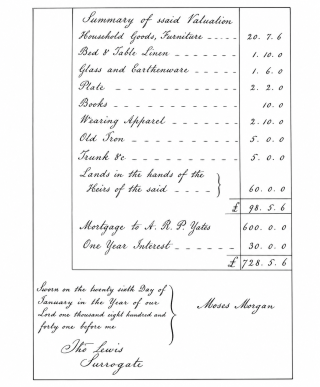
Household inventory
Inventory, Fair Orchard

Perhaps most significant was Samuel’s determination to preserve Fair Orchard for future generations. Rather than leaving the estate outright, he placed it into trust so that Moses would inherit it for life, with the property then passing to his sons and their descendants. This carefully drafted arrangement ensured that the farm would remain in the Morgan family wherever possible, reflecting the importance that many prosperous farming families placed on preserving both their land and their family’s social standing.

An inventory compiled after Samuel’s death provides an equally revealing snapshot of life at Fair Orchard. It records a well-furnished farmhouse containing clocks, books, china, silverware, feather beds, brewing equipment and a wide range of household goods, alongside the tools and equipment needed to run a successful farm. Although the estate carried a sizeable mortgage of £600, the inventory and will together paint the picture of a comfortable and prosperous household, illustrating the success Samuel had achieved through farming in the parish of Nash.

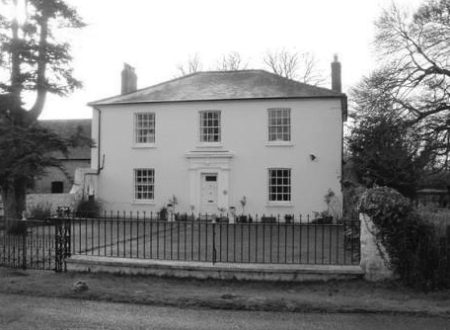
Fair Orchard, built in the early nineteenth century, remains an impressive property today. The farmhouse, together with its adjoining barn and attached agricultural buildings to the south, was designated Grade II listed in 1996, preserving an important part of the agricultural heritage of the Gwent Levels. Although no longer a working farm, the former farmhouse continues to stand as a reminder of the prosperous farming families who shaped the landscape of the Levels, and is now a desirable five-bedroom family home.

Samuel’s careful planning for the future proved to be well founded. Following the premature death of his son Moses in 1858, the provisions of the will enabled Moses’s only surviving son, Sidney Samuel Hiley Morgan, to inherit Fair Orchard. Sidney began married life at the farm before moving to Long Ashton, Somerset, in 1876, where he purchased substantial farmland and continued the family’s farming tradition.

Fair Orchard Nash
Fair Orchard, Nash
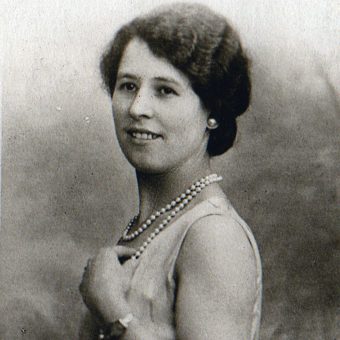
Catherine A.M. Phillips

Our own line continued not through Moses, but through his sister Catherine Morgan (1810–1869). Following the premature death of her first husband, she married Lewis Williams and moved to Spitty Farm in Lliswerry. Their daughter, Catherine Williams, married Ebenezer Phillips, and their descendants eventually included our grandmother, Catherine Alice Mary Phillips.
Samuel Morgan stands out as one of the most significant figures in the Phillips maternal line. His will and the accompanying estate inventory provide an unusually detailed picture of the prosperity enjoyed by some farming families on the Gwent Levels during the early Victorian period. Together they offer far more than a record of names and dates; they provide a rare insight into the lives, ambitions and achievements of one branch of the family from which Catherine Alice Mary Phillips – and ultimately the Skinner family – descended.

Something to add? Please contact jon@welshfamilyhistory.com