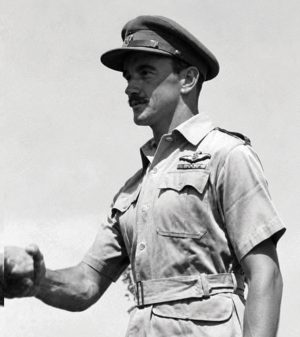
Eric Melville Baker (1918–1985) was born in Johannesburg, South Africa, on 31 May 1918, the only son of Albert Melville Baker and Ethel Maud Baker (née Oatley). His father, better known simply as Mel, had been born into a farming family at Redwick, Monmouthshire, before becoming a Welsh international rugby player and British Lion. Following the Lions tour of South Africa in 1910, Mel accepted an engineering position with the De Beers Mining Company and made South Africa his permanent home, where he eventually rose to become a Chief Engineer.
Eric grew up alongside his older sister, Dulcie May Baker, in a comfortable and successful household that valued education and achievement. Following his schooling, he enrolled at the University of Natal, where he studied for a Bachelor of Science degree, laying the foundations for what would become an equally distinguished career.
On 6 June 1942, Eric married Raynor Doris McGregor, and together they raised two sons. Like many young South Africans of his generation, Eric’s life was transformed by the outbreak of the Second World War. Joining the South African Air Force, he trained as a pilot in 1940 before qualifying for operational service the following year.
His first active service came with No. 4 Squadron SAAF in the Western Desert during the North African campaign before transferring to No. 2 Squadron in early 1942. After a brief period back in South Africa with No. 10 Squadron, he returned to combat with No. 3 Squadron, flying missions across North Africa before taking command of the squadron in April 1943. Eric quickly established himself as an outstanding leader. Promoted to Major, he later assumed command of No. 5 Squadron SAAF, leading the unit throughout the Sicilian and Italian campaigns.
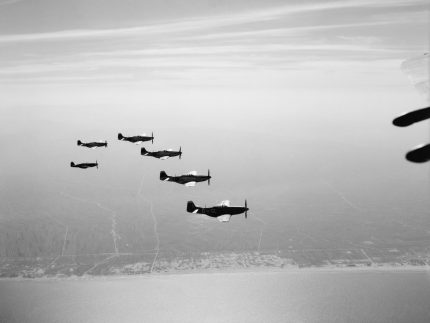
Mustangs of 5 Squadron SAAF Italy, 1942–1945
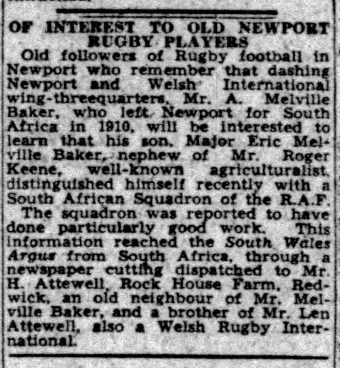
Eric Baker, South Wales Argus 1943
His courage under fire, exceptional navigation skills and determination to press home attacks, even in poor weather and under intense anti-aircraft fire, earned the admiration of both his superiors and the pilots under his command. During the war Eric flew 358 operational hours across East Africa, the Western Desert, North Africa, Sicily and Italy. Although much of his flying involved attacking enemy transport and ground targets, he also achieved notable success in air combat, destroying three enemy aircraft and damaging two more.
In December 1943, he led a large formation in a difficult low-level attack against heavily defended enemy gun positions in Italy. Despite poor weather and fierce anti-aircraft fire, his squadron successfully located and bombed the target when other formations had failed. His recommendation praised his “courage, enthusiasm and a fine fighting spirit” together with his exceptional leadership.
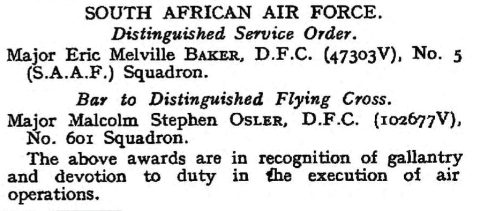
For these achievements Eric was awarded the Distinguished Flying Cross (DFC), announced in the London Gazette on 25 January 1944. Only a few months later he received even higher recognition. His recommendation for the Distinguished Service Order (DSO) described his “great gallantry and outstanding qualities of leadership”, noting that the squadrons under his command had become models of operational efficiency and that his pilots’ high morale was directly attributable to his fearless example.
During just five months commanding No. 5 Squadron, his unit destroyed around 70 enemy vehicles while successfully completing eighty operational missions. The award of the DSO was announced on 7 April 1944, making Eric one of the most highly decorated South African fighter commanders of the war.
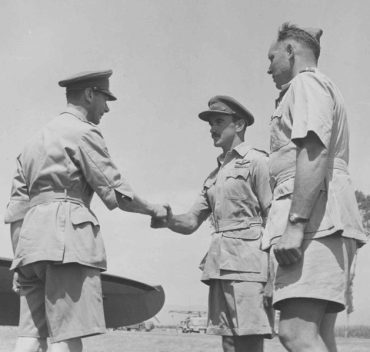
Eric M. Baker (centre)
Eric M. Baker in UK, London Gazettes 1944
His rise through the ranks was equally remarkable. Having entered the war as a pilot officer, he was promoted to Captain, then Major in April 1943 and Lieutenant-Colonel in May 1944, while still only twenty-five years of age. He subsequently commanded No. 239 Wing in Italy before returning to South Africa later that year to take charge of No. 27 Air School, remaining in command until the end of the war.
Following the war, Eric successfully transferred his leadership skills into the business world. With his scientific background and experience of managing large organisations, he entered the petroleum industry, becoming a Director of the Standard Oil Company of South Africa.
At the time, Standard Oil operated through the Standard-Vacuum Oil Company (Stanvac), a joint venture formed in 1933 between Standard Oil of New Jersey (later Exxon) and Socony-Vacuum (later Mobil). Stanvac was responsible for refining, distributing and marketing petroleum products throughout Southern Africa under well-known brands including Esso and Mobiloil. During the difficult years immediately following the Second World War, the company played a vital role in keeping transport, industry and commerce supplied with fuel across the region. Its South African roots stretched back to 1897, when Vacuum Oil established a branch in Cape Town.
Eric’s appointment as a Director reflected the confidence placed in his organisational ability and leadership. The qualities that had earned him the Distinguished Service Order and Distinguished Flying Cross during the war proved equally valuable in post-war industry, where he helped oversee one of Southern Africa’s most important energy businesses.
Vacuum Oil Company
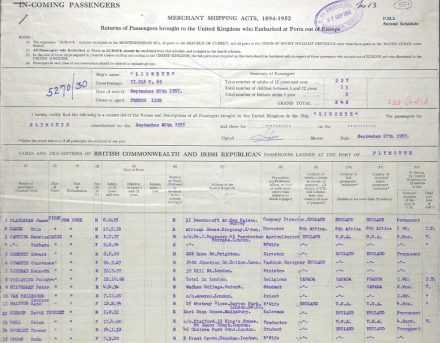
In London on business Sept 1955
His work increasingly took him overseas. In 1947 he travelled to New York on a six-month business visa, while passenger records from 1955 describe him as a company director travelling between New York and London on international business. At the time his business address was recorded as Africa House, Kingsway, London, then one of the principal commercial centres for companies involved in trade throughout the African continent.
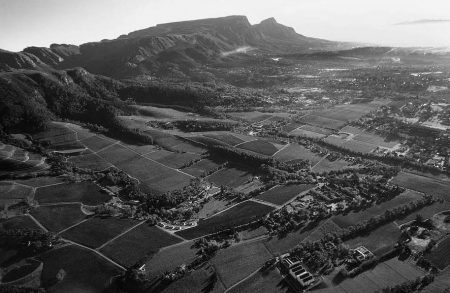
Recognising the importance of modern management techniques, Eric attended Harvard University in 1959, studying management at one of the world’s leading business schools. The course reflected the growing international outlook of his career and the senior executive positions he had attained. In later life Eric lived in Bishopscourt, one of Cape Town’s most prestigious residential suburbs. Situated on the eastern slopes of Table Mountain beside the world-famous Kirstenbosch National Botanical Garden, Bishopscourt has long been home to diplomats, business leaders and some of South Africa’s finest historic homes.
Lieutenant-Colonel Eric Melville Baker DSO, DFC died at Bishopscourt on 5 October 1985, aged sixty-seven. Like his father before him, Eric’s life took the Baker family far beyond its farming roots on the Gwent Levels. While Mel earned distinction on the rugby field before forging a successful engineering career in South Africa, Eric became one of the country’s most decorated wartime airmen before rising to senior leadership in international business.
Together, father and son left an extraordinary legacy that spanned three continents, two world-class sporting and military careers, and a remarkable chapter in the history of the Baker family.