Mel Baker Talented Rugby International
rugby Star who Emigrated to South Africa
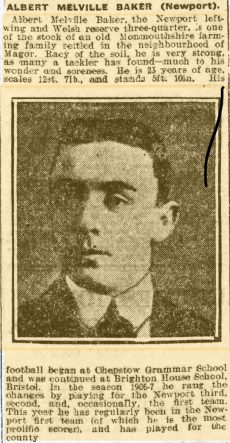
Albert Melville Baker (1885–1971) was one of our first cousins from the Baker family line. While many members of the Baker family achieved considerable success as farmers across the Gwent Levels, Mel chose a very different path. Gifted both academically and athletically, he became a Welsh international rugby player, represented the British Lions, and eventually built a successful engineering career in South Africa.
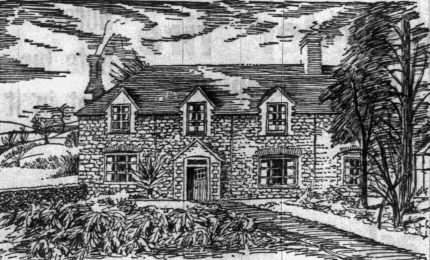
Mel was born on 12 January 1885 at Green Street House, Redwick, Monmouthshire, the son of Albert Sidney Baker and Susan Cecilia Baker (née Waters). His father was one of the district’s leading farmers, farming around 300 acres and employing seven agricultural labourers, making him one of the largest employers in the parish. Although christened Albert Melville Baker, he was known throughout his life simply as Mel. He was baptised at St Thomas’ Church, Redwick, on 22 February 1885.
Mel was the sixth of eight children. His older siblings were Sidney (born 1873), Annie (1874), Florence (1875), Ivor (1877) and William (1880), although William sadly died in infancy in 1881. Shortly after Mel’s birth the family moved to Manor Farm, St Brides Netherwent, where two younger children were born: George in 1887 and Hilda in 1890
Mel first attended Chepstow Grammar School before becoming a pupil at Brighton House School in Bristol. The 1901 Census records the sixteen-year-old Mel as a boarder at the school, which stood on Redland Park in the affluent suburb of Redland. Brighton House School enjoyed an excellent academic reputation and was also closely associated with rugby. Its headmaster, Frederick Downing Cleveland Smith, was a founding member of the Bristol Combination Rugby Football Union, providing an ideal environment for the talented young winger to develop his sporting ability.
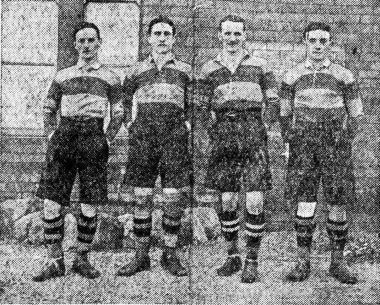
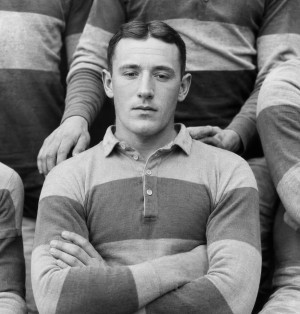
After completing his apprenticeship with Messrs Phillips Howard in Cardiff, Mel began work as an engineer at Lysaght’s Steelworks in Newport. Like all rugby players of the era, he remained an amateur, balancing full-time employment with his sporting career. By 1906 he had joined Newport Rugby Club, making his first-team debut during the 1906–07 season. His pace and finishing ability on the wing quickly earned him a reputation as one of the finest players in Welsh rugby.
Mel’s outstanding club form led to his selection for Wales, winning his first international cap on 6 February 1909 against Scotland at Inverleith under the captaincy of the legendary Billy Trew. Wales won the match and Mel retained his place for the international against France in Paris. Although this fixture was not officially part of the Home Nations Championship, it produced one of the highlights of his career. Wales overwhelmed France 47–5, with Mel scoring a remarkable hat-trick of tries.
The 1908–09 Welsh side completed the Triple Crown, and although Mel did not play in every championship fixture, he was a member of one of the greatest Welsh teams of the era. He earned his third and final cap against Scotland in 1910, scoring another try as Wales secured a convincing 14–0 victory, taking his international tally to four tries from just three appearances.
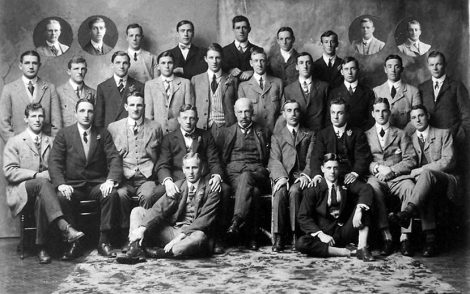
The year 1910 proved to be the pinnacle of Mel’s rugby career. Playing for Newport, he scored the only try of the match in the famous victory over the touring Australian side, one of the club’s greatest early achievements. His performances also earned selection for the British Lions tour of South Africa, where he appeared in the Third Test on 11 June 1910, becoming one of seven Newport players selected for the touring party.
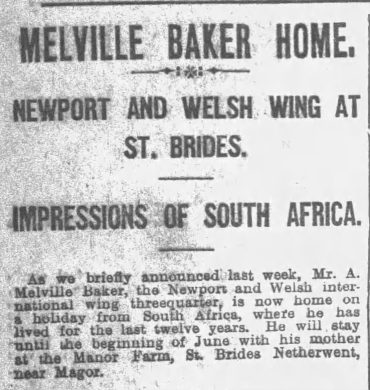
The Lions tour changed the course of Mel’s life. While staying in Kimberley he received an attractive job offer from the De Beers Mining Company, where he joined the Construction Department as an engineer. Instead of returning home with the rest of the touring party, Mel chose to remain in South Africa and begin a completely new chapter. He was not alone in making this decision, as fellow Newport forward Phil Waller also settled permanently in South Africa after the tour.
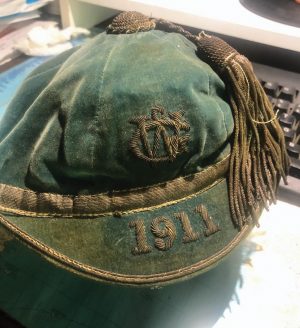
Despite beginning a demanding engineering career, Mel continued to play rugby at the highest level. Representing Griqualand West, he helped the province win the 1911 Currie Cup, only the second championship in their history. Away from rugby he was also an enthusiastic tennis player and swimmer.
His engineering career flourished. By 1914 he had joined the Victoria Falls and Transvaal Power Company in Johannesburg. Established in 1906, the company supplied electricity to the gold mines of the Witwatersrand and played a vital role in South Africa’s rapidly expanding mining industry. Mel steadily rose through the organisation and eventually became its Chief Engineer, a remarkable achievement for a young man who had left rural Monmouthshire with little expectation that he would settle on the other side of the world.
In 1915, aged thirty, Mel married Ethel Maud Oatley in Johannesburg. The couple had two children, Dulcie May Baker, born in 1916, and Eric Melville Baker, born in 1918. Although South Africa became his permanent home, Mel never lost touch with Wales and returned regularly to visit family and friends.
One of the most extraordinary moments in his rugby career came during a visit home in 1922. Although he had left Newport over a decade earlier, he was invited to guest for the club against the Barbarians on 18 April 1922. Remarkably, he marked his return by scoring a try in a famous Newport victory. He can probably claim to hold the record for the longest gap between appearances for Newport Rugby Club. His penultimate game came during the 1909–10 season before departing on the Lions tour, while his final appearance came twelve years later in 1922. Across his Newport career he played 84 matches, scoring an impressive 56 tries.
Mel continued to return to Wales throughout his life, visiting in 1931, 1939 and again in 1958. The 1939 Register records him staying with his sister Hilda Price at Trelenny, Mathern, near Chepstow. His wife Ethel accompanied him, and his elderly mother Susan, then in her nineties, was also living there and was recorded as a widow. The register also shows how far Mel’s career had progressed since settling in South Africa, recording his occupation as Chief Engineer.
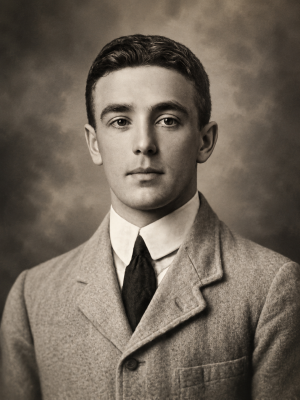
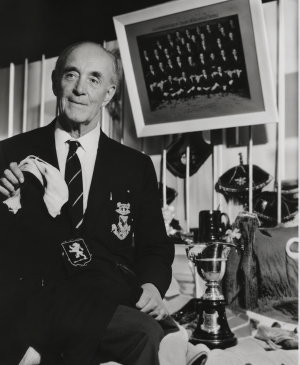
In 1971, the South Wales Argus featured Mel in its “Where Are They Now?” series. The newspaper reported that the 86-year-old former Welsh international was still living just outside Durban and continued to take a keen interest in the fortunes of Newport Rugby Club. It recalled his three appearances for Wales, the 1910 British Lions tour, and noted that he and fellow Newport player Phil Waller had both chosen to make South Africa their permanent home.
The article also mentioned that his younger brother, George Baker, was still farming near Magor at the age of eighty-five, continuing the family’s long agricultural tradition in Monmouthshire. Albert Melville Baker died in Natal later in 1971, only a short time after the newspaper article was published.
Mel’s life was an extraordinary departure from that of most members of the Baker family. Born into one of the leading farming families on the Gwent Levels, he became a Welsh international, a British Lion, a Currie Cup winner and a highly respected engineer whose work helped power South Africa’s mining industry. More than a century after he first pulled on a Newport jersey, Mel Baker remains one of the most distinguished sportsmen to emerge from our Baker family and a remarkable example of how one decision, made during a rugby tour in 1910, changed the course of an entire lifetime.
If you can tell us anymore about Mel’s life we would be delighted to hear from you. Email jon@welshfamilyhistory.com