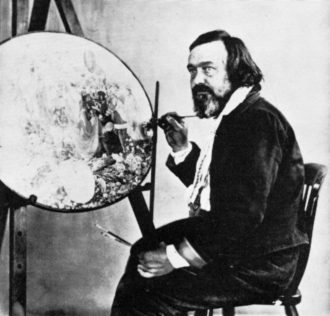
Richard Dadd remains one of the most remarkable and tragic artists of the Victorian period. Although best known today for his extraordinary paintings created during his long confinement in psychiatric hospitals, he also played a small but fascinating role in the history of the Phillips family.
In 1842, the distinguished Newport businessman and former Mayor of Newport, Sir Thomas Phillips, commissioned the young artist to accompany him on an ambitious ten-month journey across Europe and the Near and Middle East. Dadd was employed as both travelling companion and artist, with Sir Thomas funding the expedition in return for a series of paintings and sketches recording their travels.
At the time of their trip, Richard Dadd was regarded as one of Britain’s most promising young artists. Born in Chatham, Kent, on 1 August 1817, he showed exceptional artistic ability from an early age. After studying at the Royal Academy Schools, he became one of the leading members of a group of talented young painters known as The Clique. He won several awards for his drawing and painting, produced illustrations for books, and had already begun to establish an impressive reputation.
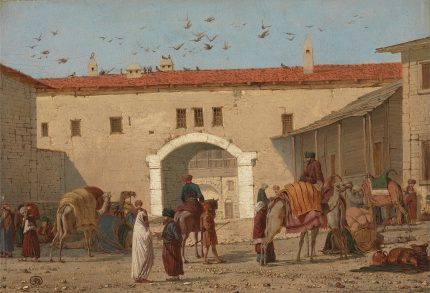
Sir Thomas Phillips left England with Dadd on 16 July 1842. Their journey took them through Switzerland, northern Italy, Greece, Turkey, Syria, Palestine, Egypt, Malta and southern Italy before returning towards England. Throughout the expedition Dadd filled sketchbooks with detailed studies of landscapes, architecture, people, animals and local customs. Although the pace of travel allowed little opportunity for finished paintings, the surviving sketches reveal the extraordinary precision and imagination that would later define his work.
Caravanserai at Mylasa in Asia Minor 1845
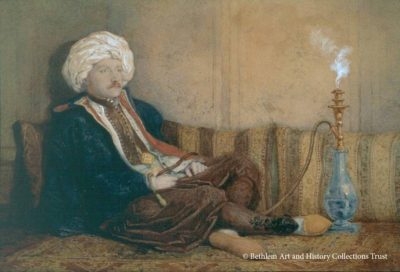
Thomas Phillips by Richard Dadd
Among the surviving pieces from the journey are two watercolour portraits of Sir Thomas Phillips, one showing him dressed in traditional Arab clothing and another in Turkish costume. These paintings remain an important visual record of the expedition and provide a unique connection between one of Britain’s greatest Victorian artists and a prominent member of our Phillips family.
Sadly, the journey also marked the beginning of Dadd’s severe mental illness. During their travels he began displaying increasingly erratic behaviour, becoming argumentative over religious matters and experiencing disturbing delusions. Unknown to Sir Thomas, Dadd had become convinced that he was being pursued by evil forces, sometimes believing that the Devil had taken the appearance of those around him, including Sir Thomas himself.
Although there were brief periods when his condition appeared to improve, his mental health rapidly deteriorated. In the spring of 1843 he separated from Sir Thomas in France and returned alone to England, where his family soon realised that he was seriously unwell. Only a few months later, in August 1843, Dadd suffered a complete psychological breakdown. Believing his father to be the Devil in disguise, he fatally stabbed him before fleeing towards France. He was arrested near Paris after attacking another traveller, confessed to the murder, and was returned to England.
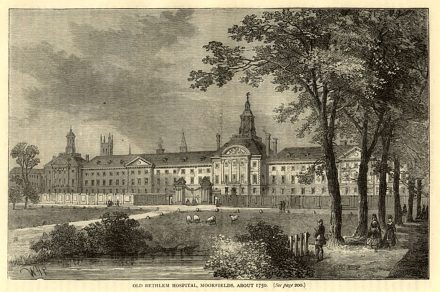
Dadd spent the remainder of his life in secure psychiatric hospitals, first at Bethlem Hospital, commonly known as Bedlam, and later at Broadmoor Hospital. Modern historians generally believe he suffered from paranoid schizophrenia, a condition that was not understood during the Victorian period.
Bethlem Hospital
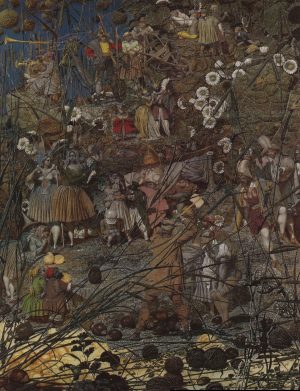
The Fairy Feller's Master-Stroke
Despite spending the remainder of his life in secure psychiatric hospitals, Richard Dadd never lost his extraordinary artistic ability. Recognising both his talent and the therapeutic value of painting, his doctors encouraged him to continue working, providing him with materials and a dedicated space in which to paint. Within the confines of Bethlem Hospital, and later Broadmoor Hospital, Dadd created many of the masterpieces for which he is celebrated today.
His paintings from this period display an astonishing level of technical precision and imagination. Working on a relatively small scale, he filled his canvases with countless tiny figures, intricate foliage and minute details that often required close inspection to appreciate fully. Although many of his subjects were drawn from literature, mythology and folklore, they also reflected the vivid and complex inner world in which he lived. His most famous work, The Fairy Feller’s Master-Stroke, occupied him for almost a decade, it depicts a gathering of fairy folk assembled to watch a woodman prepare to split a hazelnut with a single blow.
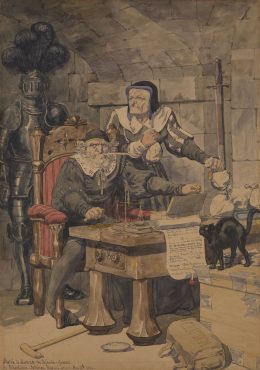
Alongside this masterpiece, Dadd produced a remarkable series of watercolours entitled Sketches to Illustrate the Passions, exploring emotions such as Love, Jealousy, Sorrow and Madness, as well as numerous imaginative landscapes, maritime scenes and portraits. Together they demonstrate that, despite the tragic circumstances of his life, his creativity remained undiminished.
After spending twenty years at Bethlem Hospital, Dadd was transferred in 1864 to the newly opened Broadmoor Criminal Lunatic Asylum in Berkshire. There he continued to paint almost every day for the remaining twenty-two years of his life, receiving only occasional visitors but earning the admiration of the doctors and staff who cared for him. Richard Dadd died at Broadmoor on 7 January 1886, aged sixty-eight, from tuberculosis after more than forty years in institutional care.
Sketch to Illustrate the Passions, Avarice
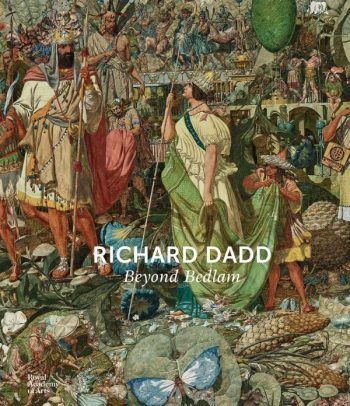
Richard Dadd catalogue
For many decades his work was largely forgotten, but during the second half of the twentieth century his reputation was dramatically revived. His paintings are now held in major public collections, including Tate, the Victoria and Albert Museum and the Bethlem Museum of the Mind. His remarkable life has inspired books, plays and music, most famously Queen’s song The Fairy Feller’s Master-Stroke. The fantasy-based lyrics make direct reference to characters and vignettes detailed in the painting and in Dadd’s companion poem.
In 2026, the Royal Academy presented Richard Dadd: Beyond Bedlam, the first major exhibition devoted to his work in many years. The exhibition introduced a new generation to the extraordinary imagination and technical brilliance of an artist whose career was forever shaped by mental illness.
For the Phillips family, Richard Dadd represents a unique historical connection. The remarkable journey he shared with Sir Thomas Phillips survives not only through written accounts but also through the sketches and portraits he created along the way. They offer a fascinating glimpse into a pivotal moment in both men’s lives – one marking the height of Sir Thomas Phillips’ adventurous life, and the other the beginning of the tragic events that would define one of Britain’s most gifted Victorian painters.
Researching the life of Richard Dadd has been one of the unexpected privileges of exploring the Phillips family history. Although his connection to our family was relatively brief, their shared journey led us to discover the extraordinary story of a talented artist. We were delighted to visit the Royal Academy’s Richard Dadd: Beyond Bedlam exhibition, where seeing many of his original paintings in person brought his remarkable talent and poignant story vividly to life.