The Baker Family of Monmouthshire
From landowners to Sporting Stars
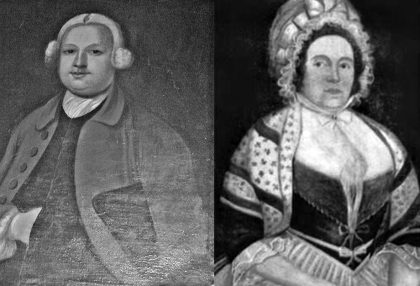
The Baker family joined our family tree on 25th April 1854, with the marriage at St Bridget’s Church in St Brides Netherwent between Ann Baker and William Watkins, our 2x great-grandparents. William was a farmer from Nash, while Ann was a farmer’s daughter from Manor Farm, Netherwent, and a descendant of the notable Haverfordwest banker, Samuel Levi Phillips.
Over time, the Bakers became one of Monmouthshire’s most distinguished agricultural families, ranking as the second largest farming family in the county by the late nineteenth century. Yet their story begins not in Monmouthshire, but across the Severn in Bristol. The family line can be traced back to William Baker (1707–1803), our 6x great-grandfather, and his son Robert Ivey Baker (1735–1770), a prominent Bristol trader and our 5x great-grandfather.
A move to Monmouthshire
The Bakers’ connection with Monmouthshire began with Samuel Baker of Bristol (1759–1813), a man of some standing, who married Catherine Levi Phillips of Haverfordwest in 1790. According to family accounts, during their honeymoon journey from Bristol to Pembroke the couple paused at the Rock & Fountain Inn near St Brides Netherwent to change horses. There they learned that Manor Farm was for sale and, in a twist of fortune, agreed to purchase it on the spot.
That chance stop at the Rock & Fountain Inn laid the foundations for what would become a Monmouthshire farming dynasty. In the decades that followed, the Bakers steadily expanded their holdings across the county – from Newport to Chepstow – establishing themselves among Monmouthshire’s leading agricultural families. Writing in the 1950s, local historian Fred Hando noted that the Bakers had grown to become the second largest farming family in the county by landholding.
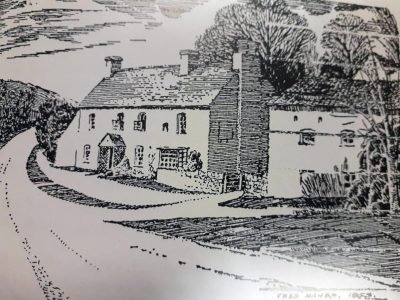
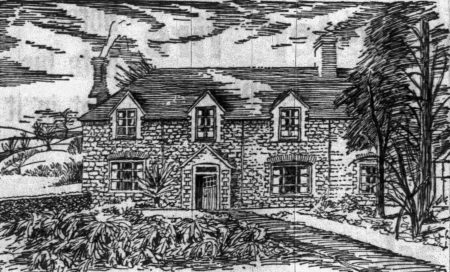
Manor Farm in Netherwent
Manor Farm was the marital home of Samuel and Catherine Baker, it lies in the quiet hamlet of St Brides Netherwent, sheltered from the easterly winds by Camp Hill. In its day, it was described as a “delightful site” – a substantial mixed holding of pasture, arable fields, and woodland, with a fine range of farm buildings. Beyond its productivity, Manor Farm became a social and agricultural hub, regularly hosting events such as the Magor Farmers’ Association ploughing contests. It stood as both the Baker family home and a symbol of rural enterprise.
Samuel and Catherine Baker raised eleven children at Manor Farm, including William Henry Baker, father of Ann Baker who would later marry William Watkins and continue our family line. All of the Manor Farm children helped carry the Baker name and influence throughout Monmouthshire.
A Farming Family
Eliza Baker (1792–1880) was born in Bristol before the family’s move to Manor Farm. She later married Walter Williams and returned to Bristol, where they raised a family. Her brother Samuel Baker (1796–1856), the eldest son, farmed 128 acres in Goldcliff and raised four children with his wife, Cecilia. Robert Baker (1797–1854) settled in the hamlet of Llandevenny, where he farmed and raised a family with his wife, Elizabeth. Their sister Catherine Baker (1808–1866) married Isaac Lawrence, and together they farmed 180 acres in Christchurch.
Not all of the Bakers remained in agriculture. George Baker (1804–1878) became a fishmonger on Commercial Street in Newport, while John Baker (1807–1878) followed a different path and became a baker by trade. As for our 3x great-grandfather, William Henry Baker (1798–1885), he married Ann Leonard, and together they raised eleven children at Goldcliff, managing a 420-acre farm and employing seven people. In later life, William and Ann returned to St Brides Netherwent, where they continued farming at the family’s ancestral home, Manor Farm.
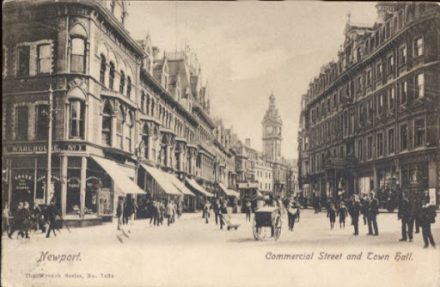
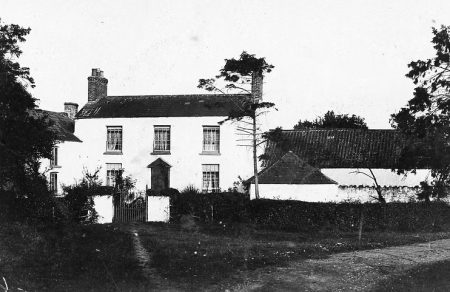
Meet the Siblings of Ann Baker
We already know that Ann Baker married William Watkins and raised a large family at Pye Corner Farm in Nash. They were a successful couple – William served as a parish overseer, and together they became well respected within the local farming community. It is equally fascinating to trace the lives of Ann’s many siblings, who each left their own mark on Monmouthshire’s agricultural history, helping to ensure that the Baker legacy endured for generations.
The eldest, Samuel (1826–1906), remained close to home, farming for many years at Lower Millbrook Farm, Llanvaches. Catherine (1829–1873) never married and later lived at Redwick House, while Matilda (1829–1913) married Edward Morgan, a butcher, with whom she raised eight children. The family lived and traded from 58 Dock Street, Newport, where their business became a familiar local presence. Selina (1829–1903) married George Thorne later in life, settling at Green Street House in Redwick, where George managed the surrounding farmland.
The Australian MP
William Baker (1832–1893), one of Ann Baker’s younger brothers, left Wales for Australia in the 1850s during the Victorian gold rush. He later moved north to Queensland, where he became involved in mining ventures at Charters Towers, a thriving goldfield of the time. In 1885, drawn once again by opportunity, Baker travelled west to Western Australia during the Kimberley gold rush, where he established a general store in Wyndham, serving the growing frontier community.
Baker entered public life soon after, standing for election at the 1890 Western Australian general election – the first held for the new Legislative Assembly. He was successfully elected and served as one of its inaugural members representing East Kimberley. His career was, however, cut short when he died in Fremantle in January 1893, after suffering for some time from pleurisy and bronchitis. His passing marked a small but notable moment in colonial history, as he became the first member of the Western Australian Legislative Assembly to die in office. He was buried at the Old Fremantle Cemetery in Western Australia.
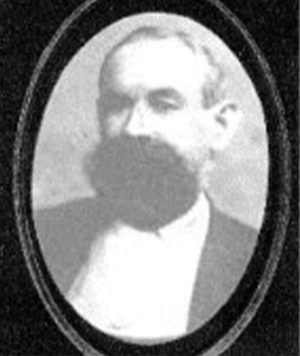
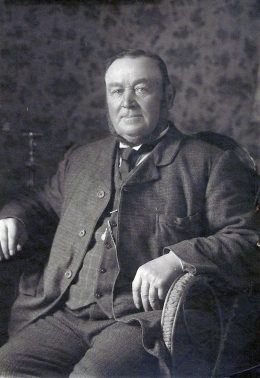
The youngest brother, Albert (1843–1921), married Susan Waters, uniting two well-known farming families of the region. He devoted his life to agriculture, first at Green Street Farm in Redwick and later back at Manor Farm, the family’s ancestral home. Among their children was the notable Welsh rugby star Mel Baker, who proudly represented Newport, Wales, and the British Lions.
More to Discover
In this article, we have only begun to uncover the story of what is a large and far-reaching family tree. Already, we have found landowners, a rugby international, and even an Australian politician among the Bakers. The family played a significant role in shaping the agricultural history of Monmouthshire throughout the nineteenth and twentieth centuries, leaving an enduring mark on the region’s landscape and communities.
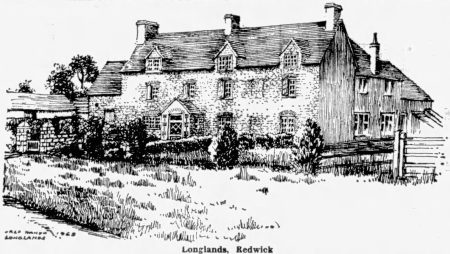
We hope in future to explore in greater depth the lives of some of the individuals mentioned in this overview, and to publish a dedicated article on Longlands Farm in Redwick, one of the key branches of the Baker family story. If you can contribute information, photographs, or memories to help expand the Baker family history, please get in touch at jon@welshfamilyhistory.com.