Lodge Farm Caerleon
Former farm on Lodge Hill
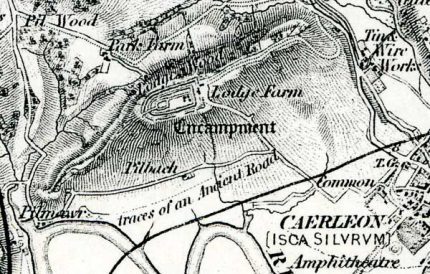
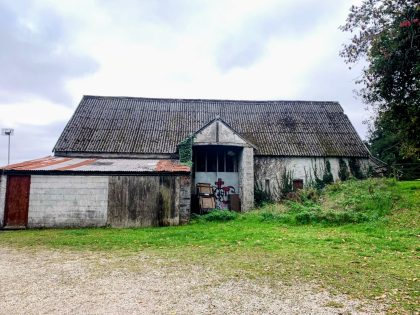
Lodge Farm once stood proudly at the top of Lodge Hill in Caerleon, beside an Iron Age hillfort and within Caerleon Park – a former medieval hunting ground. The land stretched down the hillside to the road between Caerleon and Malpas. The large farmhouse was probably built around 1650, though one of its outbuildings may have been even older.
When we visited the property in October 2025, we were pleased to find many of the former farm buildings beautifully restored and in daily use. Our primary family connection with the farm comes through the Bakers, who lived here for over fifty years from 1895.
Early History and the James Family
The name “Lodge” originates from the hunting lodges that once served medieval parks such as Caerleon Park. The farmhouse that became known as Lodge Farm was likely built between 1650 and 1660, with an intriguing outbuilding nearby that may predate it. The site includes an overgrown pond and a vaulted cellar – features that hint at centuries of layered history.
The first known residents were the James family, who lived at Lodge Farm from the mid-1600s to the 18th century. According to Bradney’s History of Monmouthshire, the family’s ancestor, James ap John Jenkin (later known as James Jones), settled here around 1650. His descendants remained for several generations, maintaining close ties with the Catholic Morgans of Llantarnam.
One of the most dramatic chapters in the farm’s history involves William and Dorothy James, who were associated with the Jesuit priest David Lewis. Lewis was executed in 1679 during the anti-Catholic hysteria of the Titus Oates Plot, and William and Dorothy appeared as witnesses at his trial. Their involvement shocked local Catholics and left a lasting stain on the family’s legacy. Later generations of the James family were buried at Llantarnam, the spiritual centre of Catholic life in the area.
By the early 1700s, the estate was owned by the Hanbury family of Pontypool, the initials “JCH” (John Capel Hanbury) and the date 1716 remain carved into the barn wall. The Hanbury family were influential industrialists from Worcestershire who became deeply connected to Pontypool , establishing ironworks in the area in the late 16th century and John Hanbury II (1664-1734) pioneering the tin-plating industry in the UK.
18th and 19th Centuries
Over the years, Lodge Farm passed through the hands of several tenants, each leaving their own imprint on its history. In 1753, parish records note Charles Griffiths living at the property, followed in the early 19th century by Charles Charles and his family, who were tradesmen – victuallers and butchers by profession. By 1844, Henry Rowlands was farming the Lodge, paying £50 a year in rent to the Hanbury estate, which still owned the land. A decade later, his son Joseph Rowland was listed as the occupier, continuing the family’s connection to the farm into the mid-19th century.
By the late 19th century, William and Margaret (Maggie) Parry were farming at The Lodge, from around 1885 until 1891. Their time here is of particular interest to us, as Will and Maggie are part of our Skinner family line. After leaving Lodge Farm, they moved to Penrhos Farm, also in Caerleon, where they continued to farm successfully before retiring to Broadwalk, in the heart of the village.
The Baker Family Era
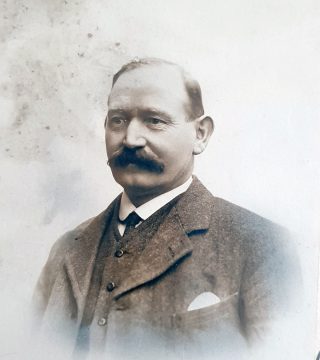
The Baker family became associated with Lodge Farm in 1895, when William Edgar Baker – a member of a well-known landowning family from Redwick – moved in. He was followed by his brother, Stephen Herbert (“Bert”) Baker, who took over the farm in 1903 after marrying Annie Gale. Bert made a great success of the farm, which he rented annually from the estate owners.
In 1926, Bert’s brother George Arthur Baker joined him when the freehold of Lodge Farm came up for sale, which George then purchased. The farm comprised 163 acres of productive woodland, arable, and pasture land, along with a fine residence. A further 36 acres bordering the Caerleon-Malpas road were sold separately for residential development.
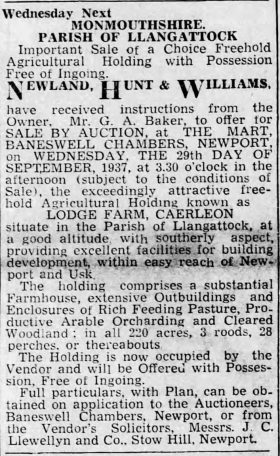
George later took over the farm in the 1930s after his brother Bert moved to Langstone. A keen horseman, he kept his horses at the Caerleon racecourse and maintained a strong connection with the local farming and equestrian community. A 1937 sale notice records George dispersing his cattle, sheep, and equipment, followed by the sale of the freehold farm. Although described primarily as an agricultural property, the sale notice also highlighted its elevated position, southerly aspect, and potential for residential development – being within easy reach of both Newport and Usk. At 220 acres, the sale suggests that George had expanded the holding since purchasing it a decade earlier.
Following George’s departure, his son Arthur Valentine Baker, a dairy farmer, remained at Lodge Farm with his wife Kathleen until the late 1950s. They lived at Lodge Bungalow, likely as tenants of the new owners. Arthur successfully bred shire stallions on the farm but was known locally for the occasional trouble caused when his sheep and horses strayed onto local roads. In 1946, two public rights of way were formally established across the farm – both of which remain in use today.
Later Owners and Community Life
In the 1950s, Mr and Mrs Till moved to Lodge Farm. Although no longer an active working farm, it became an important part of the local community. Each year, the Tills hosted a large garden party for disabled people and their carers from across Monmouthshire. These popular events attracted up to 600 guests, including local dignitaries, with fleets of coaches transporting visitors to the farm.
A New Life as Lodge Farm Church
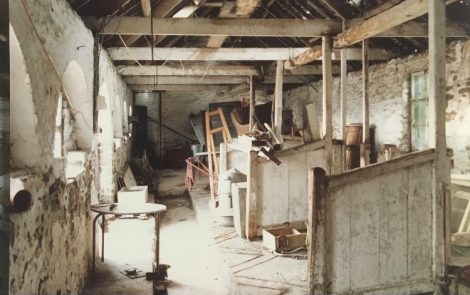
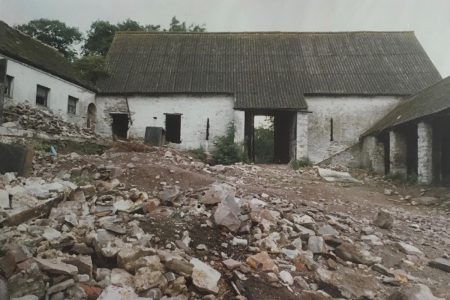
By the late 20th century, the farm buildings at Lodge Farm had fallen into disrepair. In 1969, a small group of local Christians formed the Caerleon Christian Fellowship with a vision to establish an evangelical church in the town. For more than a decade, the group met in homes, chapels, and halls.
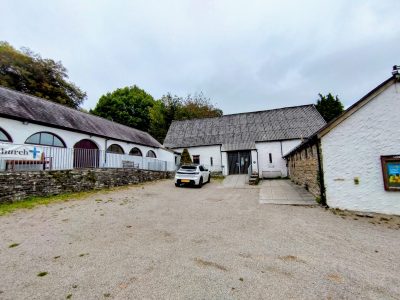
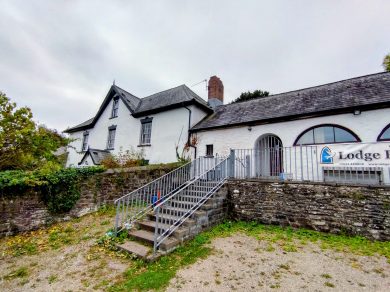
In December 1980, the Fellowship purchased the derelict Lodge Farm buildings and began converting its barns and outbuildings into a place of worship. Just three years later, in June 1983, Lodge Farm Church officially opened. In 2002 the Lodge Farm Evangelical Church and adjoining farmhouse were given Grade II listed status.
A changing landscape
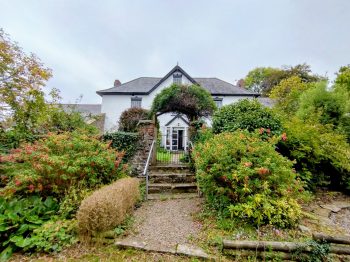
Today, the church remains a thriving evangelical congregation. The old farmhouse continues as a large family home, while the surrounding farmland has long since been redeveloped into the Lodge Farm housing estate – most of it built during the 1960s and 1970s. Yet despite the changes, the spirit of the site’s long and storied history endures.
Something to add to the story of Lodge Farm? Please email us: research@skinnerfamilyhistory.com